

Videos
Explore the people, places, and discoveries that bring Keck Observatory’s mission to life.
What’s it like working for the world’s largest optical and infrared telescopes?
Meet James Chongs and Ash Hooks, Infrastructure Technicians at Keck Observatory. Every day, the Infrastructure team helps care for the facilities and environment that supports world-leading astronomy. Their work reflects a commitment to service and stewardship, expressed through the care they bring to the Observatory, the respect they show for ʻāina, and the communities that shape them.
Behind the Mirror: Inside a Keck Segment Exchange
Every mirror segment plays a critical role in Keck’s scientific discoveries.
Go behind the scenes of a Keck segment exchange and experience the coordination, expertise, and attention to detail required to maintain the performance of the world’s largest optical and infrared telescopes.

Galaxies Viewed Through Cosmic Magnifying Glasses

Lifting the Fog on the Early Universe

Exploring Galaxies and Beyond

Cosmic Fireworks

Decoding the Contents of Distant Galaxies

Using Keck to Explore Planetary Systems Orbiting Nearby Stars

Searching for Earth-like Planets with the Keck Planet Finder

Kepler, TESS, and Keck Observatory – Driving Our Understanding of Exoplanetary Systems
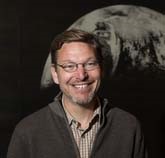
Planet Nine from Outer Space

SCALES: A New Keck Instrument for Imaging Exoplanets at 1000 Wavelengths Simultaneously

A Night in the Life of Keck Observatory

Liger: A next-generation instrument for Keck Adaptive Optics


Send a Donation
Thank you for your generous support of W. M. Keck Observatory and for becoming a valued champion of our mission to advance the frontiers of astronomy and share our discoveries to inspire the imagination of all.
Donations are tax-deductible to the extent permitted by law. Keck Observatory is registered as a 501(c)(3) non-profit organization.
Stay Updated
Be a part of our mission and unlock the frontier of astronomy. Subscribe to the Keck Newsletter for access to our latest discoveries, upcoming events, and behind-the-scenes content. Keep looking up!